

Newly Diagnosed with Glioblastoma,
Now What?
If someone you love was just diagnosed with glioblastoma — or if you just heard those words about yourself — this page is for you. You don't need a medical degree to be here. You don't need to have Googled anything yet. You just need to know that what you're feeling right now is completely valid, and that you are not alone. We're going to walk through what glioblastoma actually is, what the first few weeks typically look like, and what questions are worth asking. We'll tell you the hard things honestly, because you deserve that. And we'll tell you the hopeful things too, because there are real reasons for hope.
So what exactly is glioblastoma?
Glioblastoma — also called GBM or glioblastoma multiforme — is a type of brain cancer. It is a malignant (cancerous) grade 4 tumor. It starts in the brain itself, in cells called glial cells, which are the support system for your neurons. When those cells mutate and grow out of control, they form a tumor. GBM is the most aggressive form of brain tumor. It tends to grow quickly, and it has a way of sending tentacle-like extensions into the surrounding brain tissue, which makes it very difficult to remove completely with surgery.
The exact cause of glioblastoma is unknown. The majority of glioblastoma patients have no family history or identifiable risk factors. Patients with Li-Fraumeni syndrome, neurofibromatosis, Turcot syndrome, Lynch syndrome, or constitutional mismatch repair deficiency syndrome, however, may be at higher risk of developing high-grade gliomas like glioblastoma. Exposure to ionizing radiation as a result of radiation therapy for childhood brain tumors or leukemia is also a risk factor for high-grade gliomas (ABTA).
Prognosis means a prediction of outcome. This information is usually based on information gathered from groups of people with the same disease. A note on prognosis: The median survival for GBM is often cited as 12–18 months. That number gets shared a lot, and it's terrifying to read. But median means half of patients do better than that — sometimes significantly better. Long-term survivors exist. Research is moving faster than it ever has. That number is not your person's fate.
What happens in the first 30 days?
The period right after diagnosis is usually a blur of appointments, scans, and decisions. Here's a general sense of what to expect — though every person's path is different.
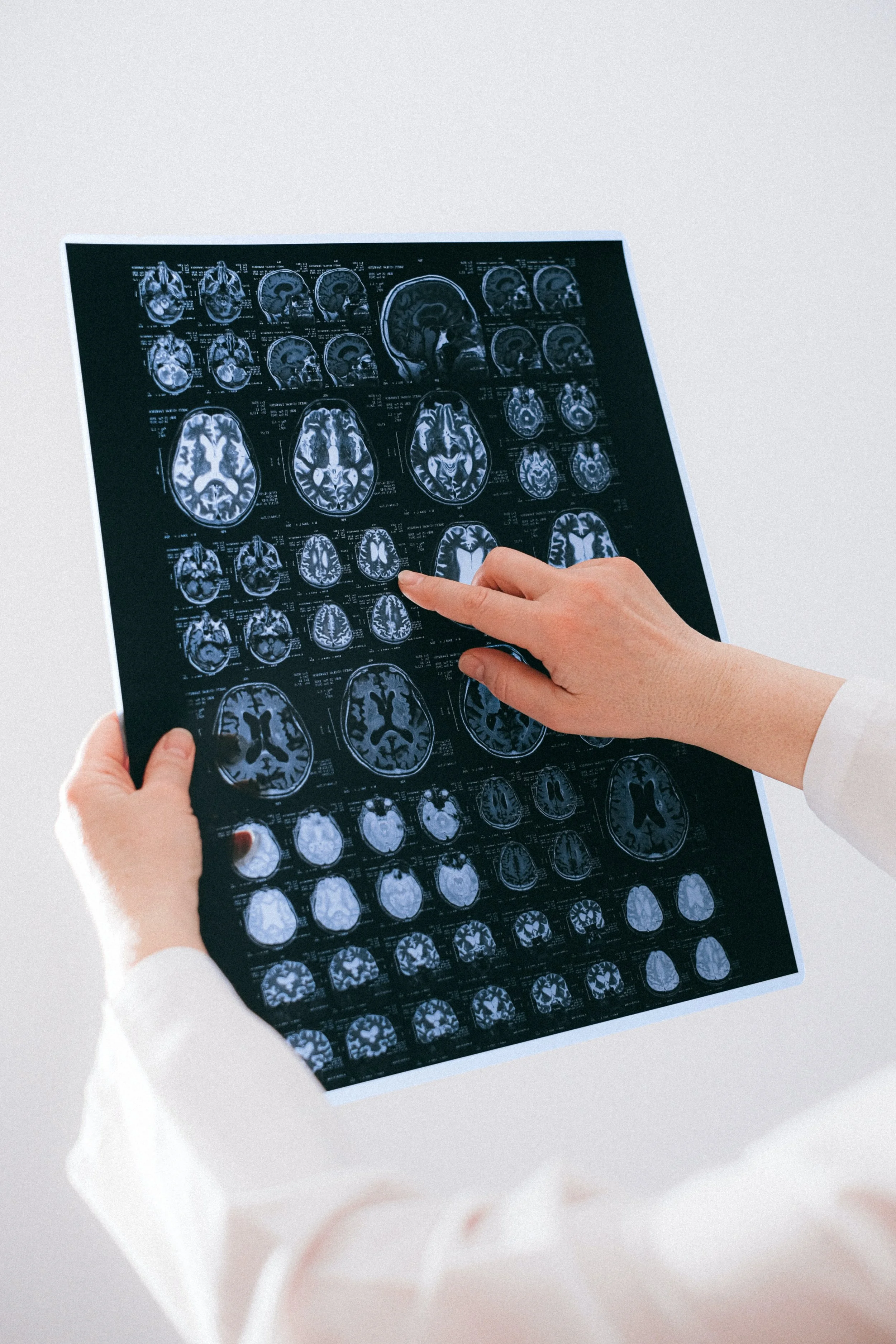
Most GBM diagnoses start with an MRI — often triggered by a new symptom like a seizure, persistent headaches, sudden changes in vision, difficulty finding words, or a noticeable shift in personality or mood. These symptoms feel alarming in retrospect, but they're often subtle at first. If a mass was found on that scan, you were likely referred to a neurosurgeon. You may have also had a CT scan as a first step, especially if the symptom onset was sudden (like a seizure in an ER). An MRI gives much more detail and is the definitive imaging tool for brain tumors.
Ask about Clinical trails in the beginning! Clinical trials are research studies testing new treatments in real patients. For GBM, they are not a last resort — they are one of the most important options to be aware of from day one, because the standard treatment protocol has not fundamentally changed in nearly 20 years. Many of the most promising approaches are available only through trials. There is a common fear that enrolling in a trial means you might receive a placebo instead of treatment. In GBM oncology, this is rarely how trials work — most compare a new treatment added to standard care against standard care alone.
Visit clinicaltrials.gov — search "glioblastoma" and filter by your location, age, and whether you are newly diagnosed or recurrent.
Ask your neuro-oncologist explicitly: "Are there trials I qualify for right now, before I start standard treatment?" Some trials require enrollment before surgery or treatment begin. Major cancer centers run GBM-specific trial programs and can often tell you within one consultation whether you qualify for anything active
The American Brain Tumor Society maintains a trial finder here, which also explains the trials in digestible terms, in comparison to clinicaltrials.gov.
Finding the right surgeon is the next step. The doctor who will operate on a brain tumor is called a neurosurgeon. But not all neurosurgeons are the same, and for GBM specifically, you want someone who does high volumes of brain tumor surgeries — ideally at a comprehensive cancer center or an academic medical center with a dedicated neuro-oncology program. The title to look for is a neurosurgeon with a specialization in neuro-oncology or skull base surgery. Some will also hold the title of surgical neuro-oncologist. These are surgeons who spend the majority of their practice on brain tumors specifically, rather than general neurosurgery cases like spine or trauma.
Ask your referring neurologist or ER physician for a referral to the nearest NCI-designated comprehensive cancer center — these have dedicated brain tumor programs.
Search the American Brain Tumor Association directory at ABTA.org to find brain tumor programs by institution name or your state.
Major centers known for GBM care include MD Anderson, Memorial Sloan Kettering, Mayo Clinic, UCLA, Duke (Preston Robert Tisch Brain Tumor Center), and Massachusetts General Hospital — but strong programs exist across the country.
The Knox Martin Foundation has a direct line to Duke- find out more here.
Second opinions are not an insult to your doctor. They are standard of care for serious cancer diagnoses, and most oncologists expect and support them. For GBM specifically, a second opinion matters for two reasons: confirming the diagnosis and confirming the surgical plan. Pathology second opinions — where a second neuropathologist reviews the tumor tissue — occasionally catch meaningful differences in diagnosis or molecular subtype that can change the treatment approach. Surgical second opinions can confirm whether the proposed extent of resection is appropriate, or whether different technology might be available at another center. Why this step is worth slowing down for: GBM is urgent — but you almost always have 1–2 weeks before surgery must happen. That is enough time to get a second surgical opinion if you want one. Where you have surgery can affect how much tumor is removed, which affects everything that comes after.
To prepare, ask your current team to send your MRI images and any pathology slides to another center electronically — this can happen within days
Many major cancer centers offer rapid second opinion consultations for newly diagnosed brain tumor patients.
You do not need to switch your care to a new center to get a second opinion — many people get a second opinion and return to their original team
In most cases, the next step is a surgical procedure to remove as much of the tumor as possible. This is called a craniotomy — where the surgeon opens the skull to access and remove as much of the tumor as possible. The goal is called maximal safe resection: remove as much tumor as you can without causing new neurological damage. More tumor removed is generally associated with better outcomes. The goal is also to get a biopsy — a sample that gets analyzed to understand the specific genetic makeup of your tumor.
About a week after surgery, you'll receive results from the molecular analysis of the tumor tissue. This report is one of the most important documents in your entire treatment journey. Ask your oncologist to walk through this report with you in plain language. It is not rude to ask them to explain what each finding means for your specific treatment options. Key things it should tell you include:
DH mutation status: IDH-mutant tumors (more common in younger patients) generally have better prognoses than IDH-wildtype tumors, which is the more common GBM subtype.
MGMT methylation status: if the MGMT gene is methylated, the tumor is significantly more responsive to temozolomide chemotherapy — this is one of the strongest predictors of treatment response. A "methylated" tumor means that the promoter region of the MGMT gene has been switched off.
EGFR amplification and other markers: these affect clinical trial eligibility and emerging targeted therapy options.
After surgery, the standard treatment approach combines radiation therapy (daily, over about 6 weeks) with a chemotherapy drug called temozolomide (often called Temodar or TMZ), taken as a pill. These happen at the same time, followed by additional rounds of TMZ on its own. This protocol has been the backbone of GBM treatment since 2005. You'll likely also be prescribed a steroid called dexamethasone to reduce swelling in the brain — and many patients are offered Tumor Treating Fields (Optune), a wearable device that delivers electrical fields to disrupt tumor cell division. Both are explained in more detail on our ABCs of GBM page.
GBM almost always comes back. When it does — usually within 6–9 months of initial treatment — it's called recurrent GBM, and the treatment path shifts. Options at recurrence include re-surgery, bevacizumab (Avastin), re-irradiation, and clinical trials. The goal shifts more explicitly toward extending quality time rather than cure, though that line continues to evolve as new treatments emerge. Recurrence is devastating. It's also not the end of the road. Many patients navigate multiple rounds of treatment, and the research pipeline for recurrent GBM is active.
What Gray for Glioblastoma is here for
Gray for Glioblastoma exists because this disease doesn't get the attention it deserves and because the people living with it deserve more than a pamphlet. We fund research, raise awareness, and try to make sure that anyone touched by GBM knows they're part of a community that is actively fighting for better outcomes. You don't have to figure this out alone. Look through our comprehensive resources, view the ABC’s of GBM, reach out, join our social community and know we are here for you and wear gray for you every week!
Please visit our GBM Resource Center for resources including education and medical guidance, support groups, nutrition and wellness, legal planning, clinical trials, and caregiver resources. Visit this link to explore a curated list of helpful products and essentials for navigating a brain cancer diagnosis, thoughtfully compiled by the GFG team and our community of supporters.